
Carter County Court Records After Arrest
The path after a Carter County jail arrest usually starts with the Carter County Detention Center roster and then moves to Kentucky court records. The roster is the custody side. It may list a charge description, statute, control number, case number, arresting agency, bond amount, and intake date. The court side begins when the charge is filed, reviewed, amended, dismissed, transferred, indicted, or disposed. Kentucky District Court is central for arraignments, misdemeanors, violations, traffic matters, and felony probable-cause hearings. Circuit Court handles felony prosecutions after transfer, indictment, or other Circuit Court filing.
A booking record should not be read as the final court record. Carter County sample roster records showed probation-violation charges, nonpayment-of-court-costs cases, other-county holds, and U.S. Marshal Service custody entries. Those records help identify where to look, but a court file is the source for the formal case status. For current custody and booking details, use the Carter County jail inmate records page. For booking photos tied to a roster profile, use the Carter County jail mugshots page.
Local court route: Carter County court records after a jail arrest usually pass through District Court first, then Circuit Court for felony prosecution when the case advances.
Search Carter County Court Records
The main statewide search channels are Kentucky eCourts and CourtNet. The Kentucky Court of Justice Carter County page identifies the Carter County Justice Center, the Circuit Court Clerk, local court phones, schedules, payment options, and record-request guidance. For online case information, start with Kentucky eCourts guest access or the CourtNet case-search entry. Copies and file questions still route through the Circuit Court Clerk when the online record is not enough.
The CourtNet search works best when the Carter jail profile already gives a case number or control number. Sample Carter roster case numbers included formats such as 22-CR-00223, 23-T-02177, and 25-M-00384. If no case number appears yet, search by party name and narrow by Carter County, case type, and date range when the system offers those filters.
- Open the Carter jail roster first and save the legal name, intake date, charge description, statute, case number, control number, arresting agency, and bond fields.
- Search CourtNet or eCourts by case number and Carter County if a case number is listed.
- Search by party name when no case number is present, then narrow by criminal, traffic, county, and date filters.
- Compare the jail charge to the court charge because prosecutors or the court may amend, reduce, dismiss, or replace the original booking charge.
- Contact the Office of Circuit Court Clerk for copies, older case files, file-location questions, and records that are not available in the public portal.
The Court of Justice screenshot below shows the Carter County court source used for clerk and local schedule details. The Carter County Court of Justice page is the county-specific starting point for court records after an arrest.
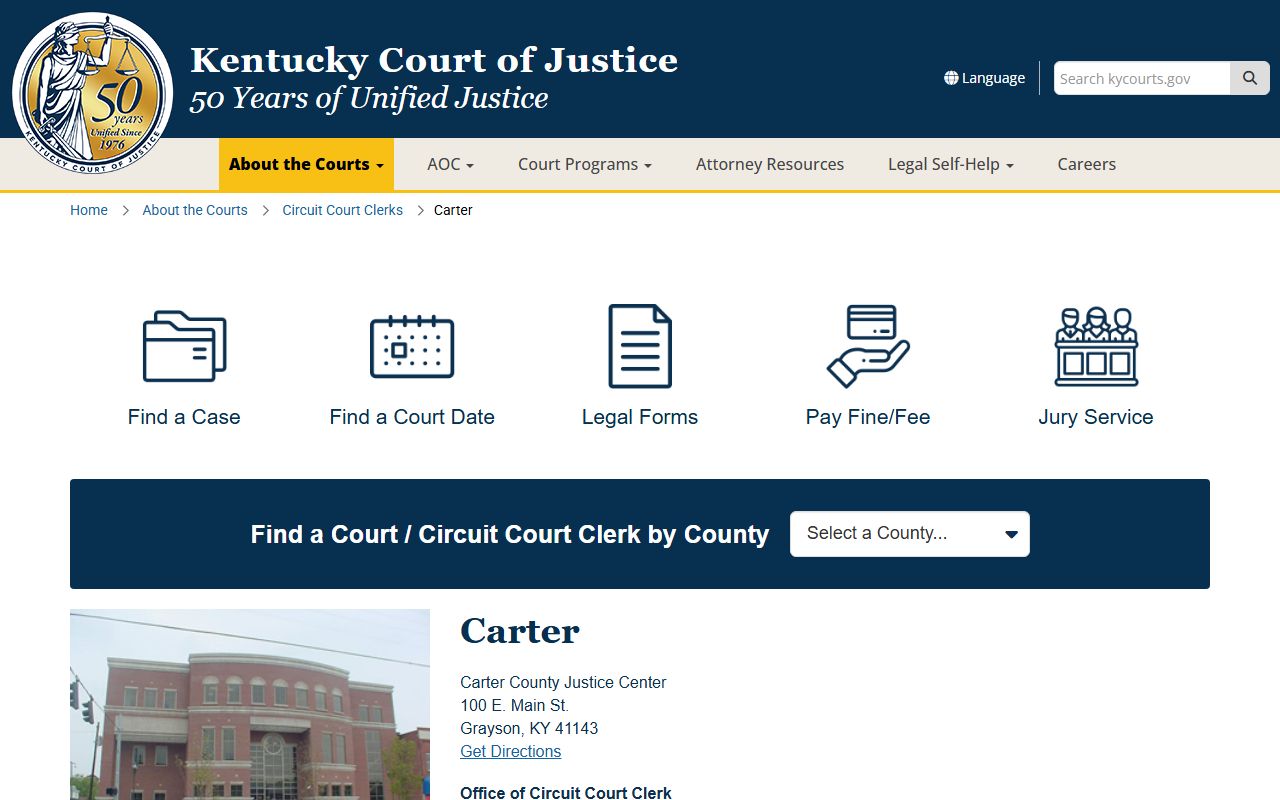
That local court page separates court questions from jail custody questions, which matters when a booking charge has become a filed case.
Carter Court Records Search Fields
CourtNet and eCourts support several routes into a case. Party search is useful when only the name from the jail roster is known. Case search is more precise when the Carter jail profile lists a case number. Citation or control-number search can help with traffic, violation, and citation-based matters. The public fields may vary by access level and case type, so use the roster as a clue set rather than a promise that every field will match online.
| Search Mode | Field or Filter | Type | Notes |
|---|---|---|---|
| Party | Last name and first name | Text | Use the legal spelling from the Carter jail profile. |
| Party | County | Dropdown | Select Carter when available to avoid statewide false matches. |
| Party | Case type | Dropdown | Criminal, traffic, civil, and other options depend on the search mode. |
| Party | Birth date or event range | Date | May narrow results, but public access can vary. |
| Case | County and case number | Dropdown and text | Use formats like the case numbers visible on Carter roster records. |
| Citation | Two-digit year and control number | Text | Use when the jail record lists a control number such as FH50040 or FA38845. |
The CourtNet search entry screenshot below shows why name, case number, and citation routes should be checked separately when tracing court records after a Carter County arrest.
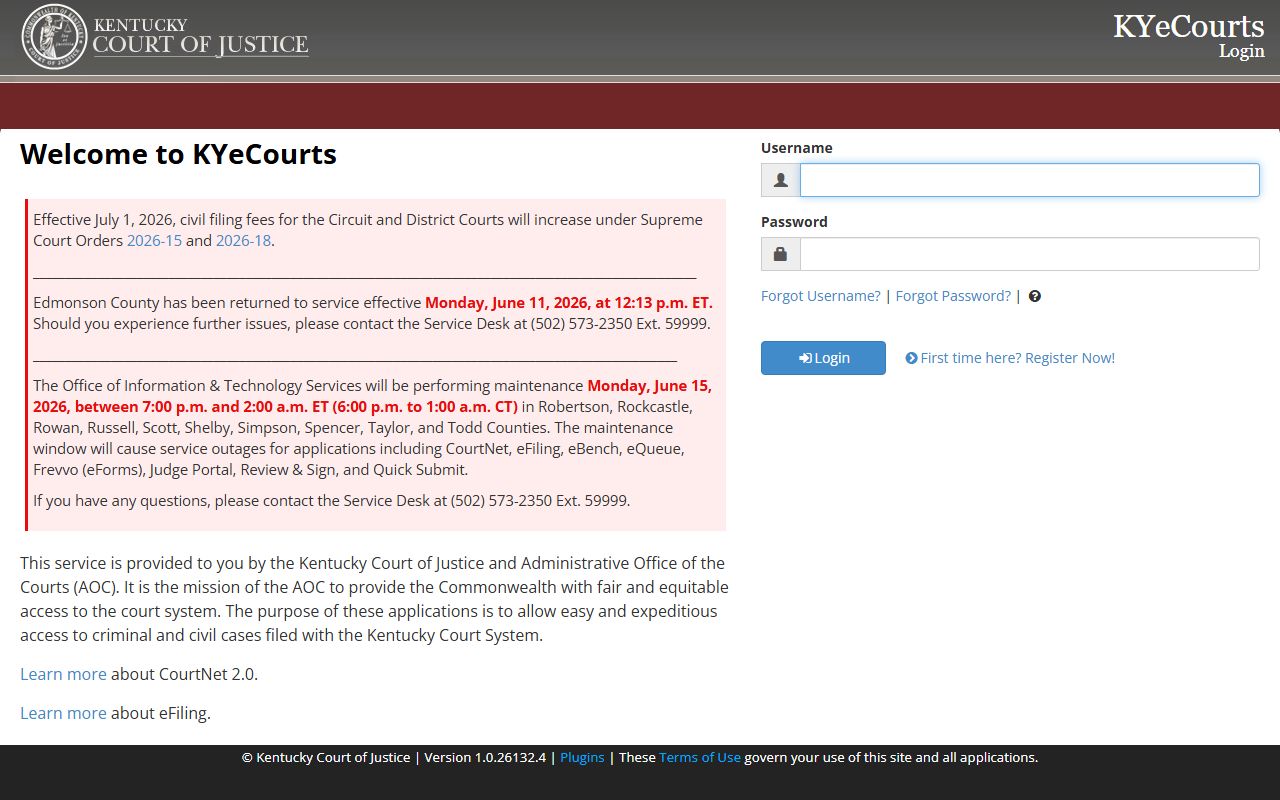
When a case is very new, the jail roster may update before the court index shows a full case entry.
Carter Arrest Charges Filed in Court
After an arrest, the charge can enter court through a citation, complaint, information, or indictment. District Court often handles the first court stage for misdemeanors, traffic cases, violations, arraignments, and felony probable-cause hearings. Circuit Court is the main court for felony prosecutions. The filed court record may use a different count, charge description, or statute than the booking record because prosecutors can amend, reduce, add, or dismiss charges as the case moves.
| Document | Common Use | What It Means |
|---|---|---|
| Complaint or citation | District Court, traffic, misdemeanor, violation, or early felony path | Starts or supports the court case after arrest and booking. |
| Information | Prosecutor-filed felony document when allowed | States the formal charge without relying on the booking text alone. |
| Indictment | Grand jury felony charging document | Moves or confirms a felony case in Circuit Court. |
For Carter County, prosecutor routing is split. County Attorney Brian Bayes handles violations of criminal law within District Court jurisdiction and serves as county government's legal counsel. Commonwealth's Attorney Brandon Ison handles felony prosecutions in the 37th Circuit, which includes Carter, Elliott, and Morgan counties. This is why a Carter County court record after arrest can begin in one court and later appear in another.
Carter County Charge Status
Charge status is the part of the court record that tells whether a charge is still active, has changed, or has reached a result. A Carter jail record may show "OPEN - ACTIVE" in a case table or "PRE-TRIAL" in a charge table, but the court file is the better source for hearing events, formal amendments, pleas, findings, and sentences. Bond amount and court date fields can appear in the jail profile, yet they should be checked against the clerk or court case before any payment, travel, or release decision.
| Status | Plain Meaning | Carter County Search Tip |
|---|---|---|
| Pending or active | The charge or case has not reached final disposition. | Check the next court date and bond fields in CourtNet or with the clerk. |
| Amended or reduced | The charge changed from the original booking or filed count. | Compare the jail charge description to the court count. |
| Dismissed | The charge was ended by court action. | Ask the clerk about copy access and expungement eligibility. |
| Acquittal | The person was found not guilty on that charge. | Use court records, not the booking record, to confirm the result. |
| Conviction or plea | The case ended in a guilty finding or plea. | Sentencing may later move the person from the jail roster to KOOL. |
Bond After Carter County Arrest
Bond appears in both jail and court contexts. Carter sample roster records showed BondType and BondAmount fields in CriminalOffenses and CriminalCases sections. Some records listed $0.00, while a nonpayment-of-court-costs record showed separate bond amounts on different charges. A zero amount does not always mean the person can leave for free. It can reflect a hold, no-bond status, a pending update, a federal or other-agency issue, or a court condition that has to be verified.
| Bond or Release Type | How It Works | Carter County Caution |
|---|---|---|
| Cash bond | Money is paid directly to secure release and appearance. | The local payment method was not located in official jail sources. |
| Surety bond | A bonding company may post bond if the court allows it. | Verify with the jail or clerk before relying on a roster field. |
| PR or own recognizance | Release is based on a promise to appear. | Not every Carter roster record labels this status clearly. |
| No-bond hold | Money alone will not release the person. | Other-agency holds, bench warrants, and federal transit entries need direct confirmation. |
| Fine or cost nonpayment | Custody may relate to unpaid court costs, fees, or fines. | Sample records showed nonpayment charges with separate amounts. |
For court-set bond or costs, use the Carter County Justice Center contacts. The Circuit Court Clerk is Larry D. Thompson. Circuit Court phone is (606) 474-5191, and District Court phone is (606) 474-6572. The court page lists cash, check, money order, and ePay for payment options, but that court payment note should not be treated as jail bond policy unless the clerk or jail confirms it for the case.
Carter Warrants After Arrest
No official Carter County KY active-warrant search page was located in the research. That makes warrants a fallback-chain issue. A warrant may show up only after it has caused a jail booking, or it may appear as a case event in court records. Carter sample roster records included failure-to-appear language, contempt of court, probation violations, and an other-county HoldInfo entry that used the record spelling "BENCH WARRENT." Those examples show how warrants and holds can keep a person in custody even when the original charge is from a different court or agency.
- Jail roster: confirms current custody after a warrant has led to booking.
- Court clerk: checks case status, failure to appear, hearing dates, and bench-warrant consequences.
- CourtNet or eCourts: searches court records by party name, case number, or citation data.
- Sheriff Department: handles sheriff-created law-enforcement records where appropriate at (606) 474-5616.
- Open records request: reaches records not online, subject to Kentucky exemptions and criminal-justice limits.
Do not treat a search result from Carter County in another state as a Kentucky warrant source. Carter County, Kentucky warrant and court questions should route through Carter County courts, the sheriff, the jail, or a written records request to the agency that holds the record.
Charges vs Convictions
A charge is an accusation or filed count. A conviction is a final result after a plea, verdict, or other finding of guilt. Court records after a Carter County jail arrest may show both at different points, but they should not be merged. A person can be arrested and charged, then later have a charge amended, reduced, dismissed, or resolved without a conviction.
| Point of Comparison | Charge | Conviction |
|---|---|---|
| Stage | Accusation after arrest or court filing | Final guilty plea, finding, or verdict |
| Proof level | Based on probable cause or filed accusation | Requires a plea or proof beyond a reasonable doubt |
| Where it appears | Jail profile, complaint, citation, indictment, or court docket | Court disposition, sentence, and sometimes KY DOC records |
| Why it matters | Shows what was alleged or filed | Shows the legal outcome that may affect custody or supervision |
Sealed and Expunged Court Records
Kentucky expungement law can affect court records after a jail arrest, especially when a case was dismissed, ended in acquittal, or meets eligibility rules for a misdemeanor, violation, traffic infraction, or certain felony conviction. Research identified three core Kentucky expungement statutes: KRS 431.073 for eligible felony convictions, KRS 431.076 for acquittal or dismissal with prejudice, and KRS 431.078 for eligible misdemeanors, violations, and traffic infractions.
| Record Treatment | Public Effect | Carter County Route |
|---|---|---|
| Sealed or restricted | Public access is limited, but some agencies may retain limited access. | Use the court order and clerk guidance to identify what must be restricted. |
| Expunged | Eligible records are removed or treated as not publicly available under the order. | File through the court process that applies to the case type and result. |
| Not eligible or not ordered | The record may remain publicly accessible if no law or order restricts it. | Verify status with the Carter County Circuit Court Clerk. |
Carter Court Records Access Limits
Kentucky's open-records laws help explain why some arrest-related records are available and others are limited. KRS 61.870 defines public records and public agencies. KRS 61.872 gives Kentucky residents the right to inspect public records through written application, subject to exceptions. KRS 61.878 lists exemptions. KRS 17.150 sets limits for some criminal justice and law-enforcement records, especially when release could affect an investigation or prosecution.
- Detainer
- A request or hold from another agency that may keep someone in custody after a local arrest issue is handled.
- Remand
- A court order that keeps or returns a person to jail custody.
- Disposition
- The final court outcome for a charge or case.
- Expungement
- A court process that removes or limits public access to eligible records.
Important: Public case lookup is not a consumer report and should not be used for employment, tenant, credit, insurance, or other FCRA-covered screening.